
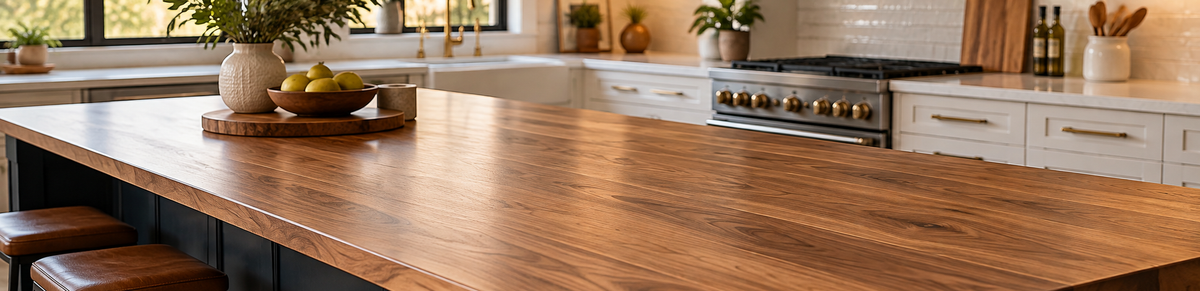
Wood finishes can completely change the appearance of cabinets, furniture, walls, vehicle interiors, and other surfaces. But achieving that look doesn't always require installing natural wood, replacing existing materials, or taking on an expensive renovation.

Woodgrain vinyl offers an alternative to real wood, allowing you to recreate natural wood colors, patterns, and textures on compatible existing surfaces. Depending on the material, vinyl can offer greater design flexibility, less installation disruption, and an easier way to update a surface without replacing it.
At Metro Restyling, we offer two distinct options: Metro Wrap Woodgrain Vinyl and 3M DI-NOC Architectural Vinyl.
Although both provide wood-inspired finishes, they serve different purposes. Metro Wrap uses flexible cast vinyl suited for automotive and decorative applications, while 3M DI-NOC is a thicker, textured architectural film better suited for many interior resurfacing projects.
The right choice depends on the surface you're wrapping, the appearance you want, and how the finished project will be used.
What Is Woodgrain Vinyl?
Woodgrain vinyl is an adhesive-backed decorative film designed to imitate the appearance of natural wood. Rather than attaching wood veneer or installing wooden panels, installers apply the film directly to a properly prepared, compatible surface.
Depending on the product, woodgrain vinyl can recreate the appearance of oak, walnut, mahogany, reclaimed wood, modern wood slats, and decorative plank arrangements.
Unlike natural wood, which has its grain and color built into the material, vinyl achieves its appearance through printed designs, embossed textures, or a combination of both.
Common applications include:
Kitchen cabinets and cabinet doors
Desks, tables, shelves, and furniture
Interior doors and wall panels
Retail displays and commercial fixtures
Vehicle dashboards and interior trim
RV and camper interior surfaces
Decorative appliances and equipment
Accent walls and custom installations
However, not all woodgrain films are interchangeable. Some are developed for flexible automotive applications, while others are engineered for architectural surfaces.
That's where the difference between Metro Wrap Woodgrain and 3M DI-NOC becomes important.
Metro Wrap Woodgrain vs. 3M DI-NOC: What's the Difference?
Both products can create a wood-inspired appearance, but their construction, texture, flexibility, and intended applications differ.
| Feature | Metro Wrap Woodgrain | 3M DI-NOC Woodgrain |
| Material | Flexible cast vinyl with printed woodgrain graphics | Thicker architectural finishing film |
| Media | 3M or Avery Dennison film options | 3M DI-NOC |
| Appearance | Printed woodgrain and decorative patterns | Wood-inspired patterns, often with embossed texture |
| Finishes | Matte, satin, gloss | Varies by DI-NOC design |
| Flexibility | Better for curves and detailed shapes | Better for flat and relatively simple surfaces |
| Compound curves | Compatible with many moderate compound curves, depending on the film | Not recommended for compound curved applications |
| Common uses | Vehicles, trim, decorative projects, furniture | Cabinets, doors, wall panels, fixtures, furniture |
| Main advantage | Flexibility and pattern customization | Architectural appearance and tactile surface detail |
Metro Wrap Woodgrain: Flexible Film for Custom Projects
Metro Wrap Woodgrain Vinyl Wraps are custom-printed cast vinyl films available with 3M or Avery Dennison media options.
Unlike conventional architectural films, Metro Wrap Woodgrain is designed around the flexibility of automotive-style wrap materials.

That flexibility makes it particularly useful for surfaces with rounded edges, contours, recesses, and more complicated shapes.
Metro Wrap Woodgrain also offers a variety of decorative patterns that go beyond traditional straight woodgrain designs.
Some available options include:
Woodgrain Tokyo: A vertical wood slat pattern suited for accent panels, modern interiors, and displays.
Woodgrain Budapest: Light natural wood tones in a chevron-inspired arrangement.
Woodgrain Stockholm: A darker stained wood appearance for furniture, vehicle interiors, and decorative trim.
Woodgrain Amsterdam: A distressed, reclaimed wood-inspired pattern.
Woodgrain Dallas: Angled wood planks featuring rich golden-brown tones.
Metro Wrap patterns are offered in matte, satin, and gloss finishes, allowing installers to control the final appearance.


A matte finish can create a more subdued look, while gloss produces stronger reflections. Satin provides a balance between the two.
Best for: Automotive interiors, rounded objects, equipment, decorative furniture, custom displays, and projects that require a more flexible material.
Keep in mind that Metro Wrap's woodgrain is primarily a printed visual effect. It does not reproduce the natural tactile grain of wood in the same way as certain textured architectural films.
3M DI-NOC: Textured Vinyl for Architectural Surfaces
3M DI-NOC Vinyl is an architectural finishing film designed to update existing surfaces without requiring a complete replacement.
Many DI-NOC woodgrain finishes combine printed wood patterns with embossed surface textures that help recreate the look and feel of natural wood.

Metro Restyling carries wood-inspired DI-NOC designs such as walnut, mahogany, teak, cherry, and other decorative finishes.
The biggest difference is the material's construction and intended use.
DI-NOC is generally thicker and less conformable than standard automotive cast wrap film. While certain products can accommodate straightforward edges and gentle contours, 3M DI-NOC should not be selected for complicated compound curved surfaces without confirming the specific film's technical requirements.
Its architectural properties make it useful for refinishing existing interior surfaces, including:
Cabinet faces
Interior doors
Flat wall panels
Office furniture
Reception desks
Retail fixtures
Decorative partitions
Commercial interior surfaces
DI-NOC is especially appealing when customers want a more traditional woodgrain appearance with surface texture.


Best for: Interior architectural refinishing projects where realistic wood appearance, tactile finish, and compatibility with flat or gently contoured surfaces are priorities.
Woodgrain Vinyl vs. Real Wood: Which Is Better?
Real wood and woodgrain vinyl each have advantages. The better option depends on whether the project requires actual structural wood or simply a new surface appearance.
| Consideration | Woodgrain Vinyl | Real Wood |
| Appearance | Printed or textured wood-inspired finishes | Authentic natural woodgrain |
| Installation | Applied to a prepared, existing surface | May require cutting, fastening, sanding, and finishing |
| Weight | Adds relatively little weight | Adds the weight of the selected wood |
| Design consistency | More repeatable patterns and colors | Natural variation between pieces |
| Surface compatibility | Requires an appropriate, stable substrate | Can be used to create structural components |
| Maintenance | Generally cleaned according to film instructions | May require refinishing or protective treatments |
| Repair | Damaged sections may require film replacement | Certain scratches and damage can be sanded or repaired |
| Cost | Can reduce replacement work on suitable projects | Depends on wood species, fabrication, and installation |
When Woodgrain Vinyl Makes More Sense
Vinyl is worth considering when the existing structure is still functional and the primary goal is changing its appearance.
For example, cabinet doors that are structurally sound but have an outdated finish may not need to be replaced. Applying a compatible architectural film can provide a new appearance while preserving the original cabinets.

The same applies to office desks, retail displays, wall panels, and decorative interior surfaces.
Vinyl also offers options that would be difficult to achieve with natural wood, such as a repeated wood slat graphic across a large surface or a woodgrain appearance on certain automotive trim pieces.
When Real Wood Is the Better Option
Real wood makes more sense when the material needs to provide structural strength, support weight, or function as an actual building component.
Solid wood may also be preferable when a surface needs to be repeatedly sanded, refinished, carved, or repaired over time.
Woodgrain vinyl is a decorative covering. It does not repair a damaged substrate, reinforce weak furniture, or provide the structural properties of timber.
What Can You Wrap With Woodgrain Vinyl?
One of the most useful things about woodgrain vinyl is the variety of surfaces it can transform.
However, selecting the right material is essential. Below are our recommendations for common projects.
| Project | Recommended film | Why |
| Kitchen cabinet doors | 3M DI-NOC | Textured architectural appearance for suitable cabinet surfaces |
| Kitchen cabinet frames | 3M DI-NOC | Well suited to refinishing compatible flat cabinet structures |
| Furniture and dressers | 3M DI-NOC | Realistic wood texture for flat furniture surfaces |
| Desks and office furniture | 3M DI-NOC | Architectural finish for decorative surfaces |
| Accent walls | Either | DI-NOC for realistic wood texture; Metro Wrap for printed decorative designs |
| Interior doors | 3M DI-NOC | Suitable for many smooth architectural doors |
| Vehicle dashboards | Metro Wrap | Greater flexibility for automotive contours |
| Vehicle interior trim | Metro Wrap | Better suited for rounded trim pieces and complex shapes |
| Refrigerators and appliances | Metro Wrap | Flexible option for compatible decorative appliance panels |
| RV cabinets | Depends on surface | DI-NOC for flat sections; Metro Wrap for more complex contours |
| Retail displays | Either | Choose based on shape, texture, and design |
| Decorative wall panels | Either | Depends on desired visual effect and panel shape |
| Curved equipment housings | Metro Wrap | More conformable cast film for approved surfaces |
These recommendations assume a smooth, stable, properly prepared surface. Film suitability should always be checked against the product's application specifications.
1. Kitchen Cabinets

Our recommendation: 3M DI-NOC
Kitchen cabinets are one of the more practical uses for architectural woodgrain vinyl.
Rather than replacing cabinet fronts solely because of their color or finish, compatible cabinet surfaces may be refinished with adhesive-backed film.
3M DI-NOC is a strong candidate because its architectural woodgrain designs can provide a more realistic texture.
However, the cabinet surface must be properly prepared. Peeling paint, loose laminate, swollen particleboard, and damaged edges can create problems with adhesion.
High-heat and high-moisture areas, including locations near ovens, stovetops, and sinks, require additional consideration. Not every DI-NOC product or substrate is appropriate for those conditions.
2. Furniture, Desks, and Tables

Our recommendation: 3M DI-NOC for most flat furniture, Metro Wrap for decorative curves
Furniture wrapping can update the appearance of desks, shelving units, dressers, and other pieces without replacing them.
DI-NOC is a good choice for furniture with broad, smooth panels where the texture and appearance of natural wood are important.
For decorative furniture with rounded corners or more complicated shapes, Metro Wrap's flexible cast construction may be easier to work with.
One limitation is surface wear. Tabletops and desks can experience repeated abrasion from keyboards, equipment, writing supplies, and everyday use.
Neither film should automatically be treated as a substitute for a purpose-built, heavy-wear tabletop surface. Evaluate the intended usage and film specifications before installation.
3. Walls and Decorative Panels

Our recommendation: Either, depending on the design
Wall projects are where the difference between Metro Wrap and 3M DI-NOC becomes especially noticeable.
For a realistic, textured woodgrain appearance, 3M DI-NOC can be a good choice on compatible, smooth architectural panels.
However, if you want a more decorative design, Metro Wrap offers greater pattern flexibility.
For example, our Metro Wrap Woodgrain Tokyo features a vertical slat design that creates the visual effect of repeated wooden strips.
The pattern creates the appearance of slats but does not add physical depth or the acoustic properties of real wood slat paneling.
For either material, wall texture, paint condition, moisture, and surface compatibility must be evaluated before installation.
4. Vehicle Dashboards and Interior Trim

Our recommendation: Metro Wrap Woodgrain
Vehicle interiors often contain complicated curves, recesses, and narrow trim pieces that require a more flexible material.
Metro Wrap Woodgrain uses cast vinyl film from 3M or Avery Dennison media options, making it better suited for many detailed automotive applications.
Potential uses include dashboard accent panels, center console trim, door trim inserts, and other compatible decorative surfaces.
The film must not interfere with airbags, controls, displays, sensors, or other safety-critical components.
For intricate interior installations, careful heating, material handling, and edge finishing are especially important.
5. Refrigerators and Other Appliances

Our recommendation: Metro Wrap Woodgrain for compatible exterior panels
Appliances are another opportunity to use decorative woodgrain finishes.
A refrigerator or other appliance with smooth, compatible exterior panels may be a candidate for vinyl wrapping.
Metro Wrap is useful for appliances that have rounded edges or slightly more complicated exterior shapes.
Before installation, verify that the surface is suitable for adhesive-backed film. Avoid heating elements, vents, seals, identification labels, controls, and surfaces that exceed the film's operating temperature limits.
Not every appliance is appropriate for wrapping.
6. RVs and Camper Interiors
Our recommendation: Both, depending on the surface
RV and camper interiors often combine cabinetry, wall panels, doors, and curved decorative trim.

For flat cabinet faces and smooth wall panels, 3M DI-NOC may offer the more realistic woodgrain appearance.
For rounded interior trim, shaped panels, and decorative accents, Metro Wrap provides additional flexibility.
RVs also experience significant temperature changes, vibration, and humidity fluctuations. The substrate, application environment, and selected film must be appropriate for those conditions.
Is Woodgrain Vinyl Cheaper Than Real Wood?
Woodgrain vinyl can be more economical than replacing an otherwise functional surface with new wood, but the overall cost depends on the project.
Material pricing is only one part of the comparison.
For vinyl, consider:
Film type and quantity
Surface preparation
Removal of existing hardware
Installation labor
Edge wrapping and trimming
Pattern alignment and material waste
Real wood projects may involve lumber or panels, cutting, fabrication, sanding, finishing, fastening, and installation labor.
If an existing cabinet, table, or wall panel only needs a cosmetic update, applying vinyl may eliminate the need for significant replacement work.
However, when extensive substrate repair is required, vinyl may not provide the most economical solution.
At Metro Restyling, our individual product pages display available sizes, media choices, finishes, and current pricing so customers can compare materials before ordering.
How Difficult Is Woodgrain Vinyl to Install?
Installing woodgrain vinyl requires many of the same preparation principles as other pressure-sensitive adhesive films, but architectural vinyl and automotive cast vinyl behave differently.
Installing Metro Wrap Woodgrain
Metro Wrap Woodgrain is generally better suited for installers familiar with automotive wrap films.
A typical installation involves cleaning the surface, positioning the film, applying it with a squeegee, and carefully working around edges and contours.
Complex curves may require controlled heat and additional installation techniques.
Excessive stretching can distort the woodgrain pattern, particularly on films with straight lines, plank arrangements, or geometric designs.
Maintaining a consistent grain direction is also important when wrapping multiple panels.
Installing 3M DI-NOC
DI-NOC is generally less forgiving on complex shapes.
The film's thicker construction and architectural surface texture require careful handling, especially around corners, edges, and seams.

It performs best when installed according to the selected DI-NOC series' surface preparation, priming, application temperature, and finishing instructions.
For professional-looking results, installers should pay particular attention to surface smoothness and consistent woodgrain alignment.
Detailed DI-NOC projects and large architectural applications may be better handled by installers experienced with architectural films.
What Tools Do You Need?
Common installation supplies include:
Film-compatible squeegees
Soft squeegee covers
Precision cutting knives
Measuring tape and straightedges
Approved surface cleaners
Suitable application heat tools
Manufacturer-approved primers when required
Explore Metro Restyling's vinyl wrap tools and application supplies to prepare for your project.
How Long Does Woodgrain Vinyl Last?
The lifespan of woodgrain vinyl depends on the specific product, installation quality, environment, and how the finished surface is used.
An indoor decorative cabinet panel may experience very different conditions from an automotive dashboard exposed to sunlight and temperature changes.
Important factors include surface preparation, UV exposure, temperature, abrasion, cleaning methods, and the quality of the underlying substrate.

Woodgrain film should be cleaned using products and techniques approved for the specific material. Avoid abrasive scrubbing, aggressive solvents, and excessive heat unless the manufacturer confirms compatibility.
Also consider that replacing one damaged section of a patterned wrap can involve matching the original grain direction and pattern alignment.
For large projects, retaining extra material from the same order may make future repairs easier.
Should You Order a Woodgrain Vinyl Sample First?
We recommend ordering a sample before committing to a large woodgrain installation.
Wood patterns can look different depending on lighting, finish, and the colors surrounding the installation.
A satin woodgrain may appear natural under soft indoor lighting, while a glossy version can produce stronger reflections.
Likewise, a film with physical woodgrain texture may feel significantly different from a smooth, printed alternative.
A sample can help you evaluate:
Actual color under different lighting conditions
Texture and surface finish
Pattern scale
Compatibility with surrounding materials
Adhesion on the intended substrate, where testing is appropriate
This is especially worthwhile for cabinetry, furniture, wall panels, and commercial installations where several panels need to match.
Frequently Asked Questions About Woodgrain Vinyl
Shop Woodgrain Vinyl at Metro Restyling
Woodgrain vinyl offers a practical way to update the appearance of existing surfaces, but the material you select should match the project.
For vehicle interiors, rounded surfaces, custom displays, and decorative applications requiring flexibility, explore our Metro Wrap Woodgrain Vinyl collection.
For architectural surfaces, furniture, cabinetry, and interior projects where a realistic wood texture is the priority, compare the available 3M DI-NOC vinyl finishes.
Review the available designs, finishes, and product specifications, and consider ordering a sample before starting a larger project. Metro Restyling offers both options so you can select the material that fits your surface, design, and installation requirements.