
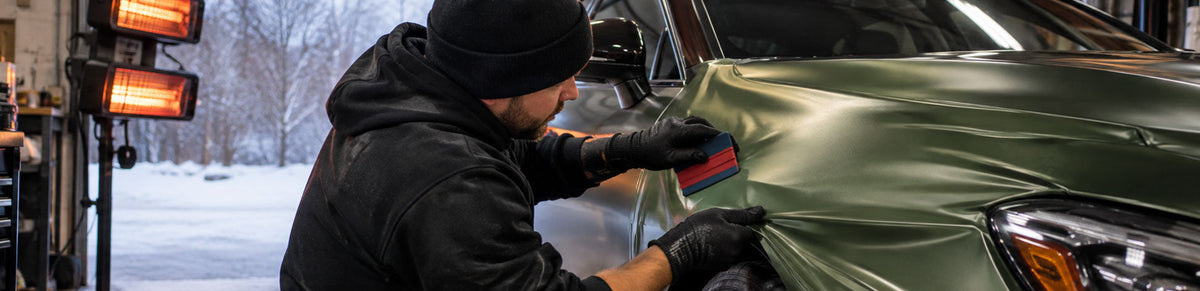
Yes, you can wrap a car in winter, but the installation needs to take place in a warm, controlled environment. Cold outdoor temperatures do not mean you have to put your wrap project on hold until spring. However, attempting to install vinyl on freezing body panels or in an unheated driveway can lead to adhesive problems, tearing, lifting edges, and other installation failures.

The biggest difference between wrapping a car in winter and summer is temperature management. You need to consider more than just the temperature inside your garage. The vehicle's body panels, the vinyl itself, and the surrounding air all need to be warm enough for proper application.
At Metro Restyling, we supply automotive vinyl wrap from brands including 3M, Avery Dennison, Hexis, KPMF, Orafol, and more. Each film has its own installation requirements, so always check the manufacturer's technical specifications before starting your project.


What Temperature Is Best for Wrapping a Car?
For many automotive vinyl wraps, a practical installation temperature range is approximately 59°F to 95°F (15°C to 35°C), with 65°F to 80°F (18°C to 27°C) being a comfortable working range for most installers. These are general guidelines, not universal specifications. Individual films may require a narrower temperature range.
Maintaining the correct temperature helps the material stretch, conform to curves, and develop proper adhesive contact with the painted surface.
| Temperature | Installation Conditions | Recommendation |
| Below 59°F (15°C) | Vinyl may become stiff, and adhesive application can become less reliable. | Warm the workspace, vehicle, and material before starting. |
| 59°F–64°F (15°C–18°C) | May be suitable for some films, but material flexibility can be reduced. | Verify the film's specified installation temperature. |
| 65°F–80°F (18°C–27°C) | Comfortable working conditions for many automotive vinyl films. | Recommended target range for most winter installations. |
| 81°F–95°F (27°C–35°C) | Some films may become softer, with more aggressive initial tack. | Monitor surface temperature and avoid overheating the material. |
Keep in mind that a heated garage does not automatically mean the vehicle is ready. A car that has been parked outdoors overnight may still have very cold metal panels even after the surrounding air has warmed up.
Why Is Wrapping a Car in Cold Weather More Difficult?
Cold temperatures change how vinyl wrap behaves during installation. Even experienced installers can have trouble working with material that has not been properly acclimated.
- Reduced flexibility: Cold vinyl becomes stiffer, making it more difficult to stretch around curves, corners, and recessed areas. Some films may tear when stretched excessively.
- Adhesive problems: Pressure-sensitive adhesives may not develop proper initial contact when applied below their recommended temperature.
- Condensation: Moving a cold vehicle into a warmer, humid space can cause moisture to collect on body panels. Applying vinyl over moisture can interfere with adhesion.
- More difficult repositioning: Cold material may be harder to lift, reposition, and conform without creating tension or wrinkles.
- Increased risk of lifting: Poor surface preparation, inadequate heat, or incorrect post-heating can contribute to edges and recesses lifting after installation.

These issues are avoidable with the right workspace and preparation. However, using a heat gun alone will not compensate for an entire vehicle or garage that is too cold.
How to Wrap a Car in Winter: Step-by-Step Preparation
1. Use a Heated Garage or Indoor Workspace
Wrapping a car outdoors during freezing weather is not recommended. Snow, wind, moisture, and freezing body panels create poor installation conditions.
Instead, move the vehicle into an enclosed garage or professional installation shop. Ideally, the space should maintain approximately 65°F to 80°F throughout the installation.
If you have a single-car garage without built-in heating, a properly sized electric space heater may help warm the area. Choose equipment suitable for garage use, follow the manufacturer's safety instructions, and keep heaters away from vinyl, chemicals, and other combustible materials.
Use a thermometer to monitor the room and an appropriate surface-temperature measuring tool to check the vehicle. Do not rely on how warm the room feels.
2. Let the Vehicle Warm Up Before Wrapping
If the car has been sitting outside in freezing temperatures, bring it indoors well before beginning installation.
When possible, allow approximately 24 hours for the vehicle to acclimate to the heated environment. Depending on the starting temperature and garage conditions, the vehicle may warm up sooner or require additional time.
The goal is to ensure that all panels have reached the film manufacturer's required application temperature and are completely dry.
Pay particular attention to:
- Doors, fenders, and quarter panels
- Hood and roof surfaces
- Door jambs and panel gaps
- Bumpers and other approved plastic surfaces
- Areas where melted snow or ice can collect
Check for condensation before applying any material. Moisture can become trapped behind the vinyl and compromise the installation.
3. Acclimate Your Vinyl Wrap Before Installation
Your vinyl needs time to reach room temperature, too.
If your wrap film was delivered during cold weather or stored in an unheated location, keep the rolls indoors for approximately 24 hours before unrolling or cutting them.
Store the material according to the manufacturer's recommendations, away from direct heat sources, excessive moisture, and rapid temperature changes.
Avoid immediately opening and stretching a cold roll that has just been delivered. Allowing the material to stabilize makes handling and installation more predictable.
4. Thoroughly Clean Away Road Salt, Dirt, and Grime
Winter vehicles collect more contaminants than many installers realize. Road salt, sand, slush, grease, and traffic film can accumulate around wheel arches, lower doors, bumpers, and panel edges.

Before wrapping, thoroughly wash the vehicle using an automotive-safe all-purpose cleaner or appropriate pre-wash solution to remove heavy contamination.
Follow these preparation steps:
- Wash away road salt, dirt, and grime from the entire vehicle.
- Pay extra attention to wheel arches, rocker panels, door edges, and recessed areas.
- Rinse thoroughly to remove cleaning product residue.
- Allow the vehicle to dry completely, including seams and areas behind trim.
- Perform the final surface wipe using a cleaner approved for the specific vinyl film and painted substrate.
- Inspect the paint for rust, peeling clear coat, wax residue, or other problems before applying vinyl.
Cleaning is particularly important in winter because salt residue and trapped moisture can interfere with adhesive contact.
Metro Restyling carries vinyl wrap tools and application supplies for surface preparation, installation, trimming, and finishing.
5. Use Supplemental Heat During Installation
Even with a heated garage, certain areas of the vehicle may need additional heat during installation.
A heat gun or infrared heating equipment can help make compatible vinyl films more pliable around complex curves, bumpers, and recessed sections.
However, heat should be used carefully. Excessive temperatures can damage the film, distort its finish, or create unnecessary stretching.
Important practices include:
- Keep the heat source moving rather than concentrating it in one location.
- Monitor film and surface temperatures.
- Avoid overstretching cold material.
- Follow manufacturer-specific instructions for heating, stretching, and repositioning.
- Use the required post-heating procedure for stretched areas and recesses.
Post-heating is especially important for films that require it because stretched vinyl can retain tension and attempt to return toward its original shape. The required temperature varies by film, so refer to its technical data sheet rather than using one temperature for every brand.
For additional installation techniques, review Metro Restyling's guide on how to wrap a car.
6. Keep the Vehicle Warm After Installation
Finishing the wrap does not mean the vehicle should immediately be driven outside into freezing weather.
Whenever possible, keep the vehicle in the heated garage for several hours after installation. Many installers prefer allowing the wrap to remain indoors overnight, especially following a full-vehicle installation during winter.
Follow the film manufacturer's requirements for post-installation conditioning before exposing the vehicle to extreme temperatures, moisture, or washing.
Before moving the car outside, inspect all seams, edges, corners, and recessed areas for signs of lifting or incomplete adhesion.
Which Vinyl Wrap Is Best for Winter Installation?
The best choice for a winter project is an automotive film that matches your vehicle, installation experience, and desired finish. There is no special winter vinyl required simply because the installation takes place during colder months.

For full-vehicle color changes, conformable automotive cast vinyl is generally a practical starting point. These films are designed for automotive contours and are commonly used by professional wrap shops.
Metro Restyling offers options from established manufacturers, including 3M, Avery Dennison, Hexis, KPMF, and Orafol.
| Vinyl Option | Common Applications | What to Consider |
| Gloss Vinyl Wrap | Full color changes, hoods, roofs, and accent panels | Traditional painted appearance; surface preparation and cleanliness are essential. |
| Matte Vinyl Wrap | Full wraps, contrasting accents, and custom finishes | Requires finish-appropriate cleaning and maintenance. |
| Satin Vinyl Wrap | Full wraps and two-tone vehicle styling | Offers a finish between matte and gloss; requires proper installation and care. |
| Metallic and Color-Shift Wraps | Custom color-change projects | Directional appearance and panel consistency may require additional planning. |
| Chrome and Specialty Films | Custom accents and specialized wrap projects | Some films have stricter stretching and installation requirements. Better suited to experienced installers. |
Beginners may find a conventional gloss, satin, or matte automotive cast film easier to work with than certain specialty finishes. However, actual installation difficulty depends on the film series, vehicle shape, and individual product characteristics.

Consider ordering samples before purchasing a full roll, particularly when comparing colors, finishes, and manufacturers. Always review the product specifications for minimum application temperature, conformability, and recommended installation procedures.
Can a Vinyl Wrapped Car Handle Snow and Freezing Temperatures?
Yes. A properly installed automotive vinyl wrap can generally be driven in winter conditions, including snow and freezing temperatures, provided the film is suitable for exterior automotive use.
There is an important difference between installing vinyl in freezing temperatures and driving a previously installed wrap in cold weather.
During installation, the adhesive needs suitable temperatures and proper surface contact. Once the film has been installed and conditioned according to the manufacturer's instructions, it can typically tolerate a much wider range of outdoor conditions.
However, winter driving introduces additional maintenance concerns:
- Road salt can accumulate along seams, lower panels, and wheel arches.
- Sand and road debris can scratch or abrade the film.
- Ice scrapers and stiff snow brushes can damage the surface.
- Existing lifting edges may become more vulnerable to contamination and moisture.
- Improper cleaning can cause premature wear or damage to certain finishes.
Vinyl wrap is primarily intended for appearance customization and offers limited surface protection. If resisting rock chips and road debris is your main priority, consider paint protection film (PPF), which is specifically designed for protective applications.
How to Maintain a Car Wrap During Winter
Winter maintenance is one of the biggest factors in keeping a wrapped vehicle looking its best. Snow alone is not usually the main problem. Road salt, abrasive debris, aggressive cleaning, and neglected damage are greater concerns.
Wash Away Salt and Road Grime Regularly
Do not let layers of winter road salt build up on your wrap for extended periods.
Wash the vehicle whenever it becomes heavily contaminated, using a mild, film-compatible automotive cleaner and soft microfiber wash materials. Hand washing is generally the preferred method.
Pay particular attention to the lower doors, rocker panels, bumpers, and wheel arches, where salt and slush commonly accumulate.
Avoid Scraping Ice Directly Against the Vinyl
Never aggressively scrape ice or frozen snow from a wrapped body panel.
Hard plastic scrapers, stiff brushes, and abrasive tools can scratch, puncture, or lift the film.

Instead, use a soft automotive snow-removal tool to gently remove loose snow without pressing against the vinyl. For stubborn ice, move the vehicle into a warmer environment and allow it to thaw naturally.
Be Careful at Automatic Car Washes
Brush-style automatic car washes can create unnecessary abrasion and may catch exposed wrap edges.
Hand washing is generally safer. If using a touchless wash, confirm that the chemicals and washing conditions are compatible with the specific film.
Avoid spraying high-pressure water directly into seams or underneath exposed edges.
Inspect Edges Throughout the Winter
Periodically inspect doors, bumpers, wheel arches, mirrors, and other areas where the vinyl has been stretched or trimmed.
If an edge begins lifting, do not ignore it. Dirt, salt, and moisture can enter the affected area and make the problem worse.
Contact a professional installer when repairs require reworking or replacing a section of film.
For more maintenance information, review our car wrap washing guide and tips on vinyl wrap lifespan in different climates.
Should You Wrap Your Car Yourself During Winter?
A winter DIY wrap is possible if you have access to a suitable heated workspace, proper tools, and enough time to prepare the vehicle and material.
For beginners, however, winter can add another layer of difficulty. Maintaining a consistent temperature while learning to position, stretch, and finish vinyl requires patience.
If you are new to vehicle wrapping, consider starting with a smaller project, such as a hood, roof, or relatively simple accent panel.
A professional installer is generally the better option when:
- You do not have a consistently heated garage.
- The vehicle has complex bumpers, curves, and recessed areas.
- You are installing a specialty film with restrictive handling requirements.
- You need a complete color change with detailed edge finishing.
- You cannot keep the vehicle indoors for the required preparation and post-installation period.

A controlled installation environment and proper technique are more important than the season itself.


Frequently Asked Questions About Wrapping a Car in Winter
Q: Can you wrap a car outside in winter?
A: Wrapping a car outdoors in freezing temperatures is not recommended. Cold vinyl becomes more difficult to handle, and adhesives may not bond properly to cold surfaces. An enclosed, heated workspace provides more reliable installation conditions.
Q: Can I wrap my car in an unheated garage?
A: Only if you can safely bring the garage, vinyl, and vehicle surfaces into the manufacturer's required installation temperature range and maintain those conditions. If the garage remains too cold, postpone the installation or use a properly heated workspace.
Q: How long should I leave my car in a heated garage before wrapping?
A: If the vehicle has been exposed to freezing temperatures, allowing approximately 24 hours indoors is a useful planning guideline. The actual time depends on the vehicle and garage conditions. Verify that the panels are warm enough and completely dry before installing vinyl.
Q: Will freezing temperatures cause an installed car wrap to peel?
A: A properly installed and conditioned automotive wrap is generally suitable for normal winter driving. However, poor surface preparation, insufficient adhesion, exposed edges, physical damage, and improper maintenance can contribute to lifting. Follow the specific film manufacturer's care and temperature requirements.
Q: How soon can I drive my newly wrapped car in winter?
A: Follow the film manufacturer's post-installation conditioning instructions. Keeping the car in a heated environment for several hours or overnight is a practical approach when temperatures outside are freezing, but some materials may have specific requirements. Check the installation before exposing the vehicle to winter conditions.
Get the Right Vinyl Wrap and Supplies for Your Winter Project
Wrapping a car in winter is completely manageable when the vehicle, vinyl, and installation environment are properly prepared. The most important steps are maintaining suitable temperatures, removing winter contamination, using heat correctly, and allowing adequate time for the finished installation.
Explore Metro Restyling's vinyl wrap collection to compare automotive film brands, colors, finishes, and available sizes for your next project. Check each product's specifications and choose the material and installation supplies that best match your vehicle and experience level.