
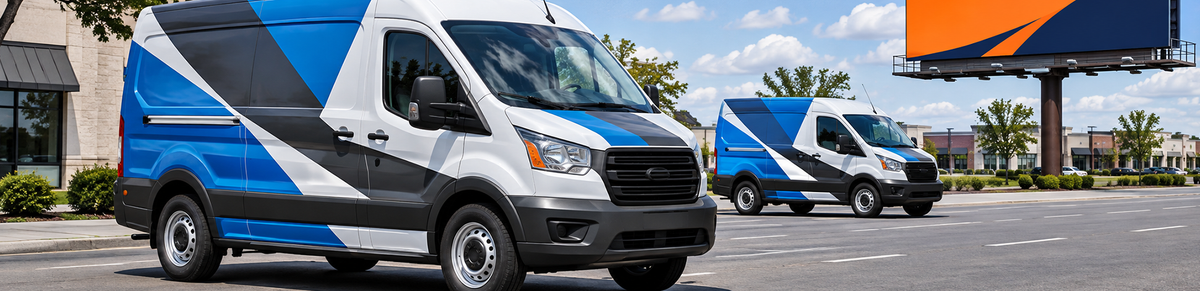
Fleet Wrap vs Traditional Advertising: Which Fits Your Business?
A fleet wrap can be a practical investment when your company vehicles regularly travel through the neighborhoods you serve. Traditional advertising can be a better fit when you need a specific placement, scheduled campaign, or audience beyond your vehicles’ normal routes. The right choice depends on your coverage area, message, budget, and ability to track results.

Fleet graphics are themselves a form of out-of-home advertising. In this comparison, “traditional advertising” refers to paid placements such as billboards, radio, television, newspapers, and magazines.
Neither approach guarantees leads. A readable wrap on an active service van has different opportunities than the same design on a truck parked out of public view. Likewise, a traditional ad needs the right audience and placement to justify its cost.
How Fleet Wraps and Traditional Advertising Compare
| Factor | Fleet Wraps | Traditional Advertising |
| Cost structure | Initial design, printing, preparation, and installation costs, followed by maintenance, repairs, and eventual removal or replacement. | Creative production plus placement costs. Continued exposure generally requires additional bookings or distribution. |
| Geographic reach | Follows vehicle routes and visible parking locations. | Depends on the billboard location, broadcast coverage, publication, or distribution area purchased. |
| Message length | Works best with brief, readable branding and contact information. | Varies by format. Print can explain details; radio and television can develop a message over time. |
| Updating the message | Requires replacement graphics or a planned update to selected panels. | New creative can run in a future placement, subject to production deadlines and booking terms. |
| Exposure period | Can continue while the graphics remain serviceable and the vehicle is visible. | Generally tied to a purchased schedule, placement period, or distribution run. |
| Measurement | Can use dedicated phone numbers, website addresses, lead-source questions, and route information. | Can use campaign-specific contact details, offers, audience estimates, and response tracking. |
When Fleet Wrap Advertising Makes Sense
Fleet wraps are worth considering when vehicles already spend time in front of potential customers. Plumbing vans, landscaping trucks, delivery vehicles, and other service fleets can display the business name while traveling between jobs or parked at customer locations where permitted.

- Your vehicles regularly operate within your target service area.
- Your business name, services, and contact information will remain consistent.
- You want recognizable branding across multiple vehicles.
- You can keep the vehicles and graphics clean and presentable.
The main advantage is using an existing business asset as advertising space without purchasing a separate media placement for every day it is displayed. However, fleet graphics still require upkeep, and exposure depends on actual vehicle activity.
When Traditional Advertising May Be the Better Choice
Traditional advertising offers control over placements that a vehicle route cannot always provide. A billboard can establish a presence along a selected corridor. A publication can reach its readership. Radio and television can communicate through sound, storytelling, and scheduled repetition.

These formats may suit a business launching a short promotion, entering a market outside its normal routes, or explaining an offer that needs more detail than a passing vehicle can carry.
A fleet wrap and a paid campaign can also work together. Consistent branding across vehicles, advertisements, and your website helps customers connect the business they see on the road with the business they encounter elsewhere.
Compare Total Costs Before Comparing ROI
A wrap quote and a monthly advertising rate cover different things. Compare both options over the same period, and include the costs required to keep each campaign working.
What to Include in a Fleet Wrap Budget
- Design and layout adjustments for each vehicle model.
- Printable film, compatible laminate, and print production.
- Existing graphic removal and surface preparation, if needed.
- Installation and time the vehicle is unavailable for work.
- Cleaning, damaged-panel replacement, and eventual removal.
Our truck wrap cost guide lists an estimated $3,500–$7,500 range for professionally installed custom or commercial printed truck wraps. Treat this as a planning reference rather than a fleet quote. Vehicle size, coverage, material, condition, and installation complexity affect the final price.
What to Include in a Traditional Advertising Budget
Include creative development, production, placement, campaign length, and any additional bookings needed to maintain exposure. Ask providers what their audience estimates represent and whether production charges are included.
For either option, a lower price does not automatically mean a better return. The useful comparison is what you spend to generate qualified inquiries and profitable work.
How to Measure Fleet Wrap ROI
Start tracking before the graphics go on the vehicle. Otherwise, it becomes difficult to separate wrap-generated inquiries from referrals, search traffic, and other advertising.

- Use a dedicated, readable phone number that forwards to your business.
- Display a short website address that redirects to a tracked landing page.
- Ask customers how they heard about the company and record the answer.
- Track qualified leads, completed jobs, and the profit associated with those jobs.
- Review vehicle activity alongside results to understand where exposure occurs.
A practical calculation is: campaign ROI equals attributable gross profit minus total campaign cost, divided by total campaign cost, multiplied by 100. Apply the same approach to traditional advertising so the comparison uses consistent assumptions.
Attribution will still be imperfect. Someone may notice a wrapped truck, search your company name later, and contact you through your website. Record multiple touchpoints when possible rather than assuming the final website visit tells the whole story.
3M discusses fleet graphics as a cost-effective advertising format and describes how routes and GPS information can support targeting and measurement. Published industry figures are useful context, but they are not a forecast of your fleet’s impressions, leads, or sales.
Full Wrap, Partial Wrap, or Fleet Decals?
You do not need full coverage to put your vehicles to work. Choose coverage around the message, vehicle condition, available budget, and how long you expect to keep the branding.
| Coverage Option | When to Consider It | Planning Consideration |
| Full wrap | You want extensive branded coverage and room for a coordinated graphic layout. | Budget for more material, installation work, and planning around complex panels. |
| Partial wrap | You want prominent graphics on selected areas while incorporating the original paint color. | The exposed paint and printed graphics need to work together as one design. |
| Spot graphics and lettering | Your main priority is a clear logo, service description, and contact information. | Placement, contrast, and readable sizing matter more than filling every panel. |
For custom designs and printed graphics, compare Printara’s fleet and commercial vehicle wraps. Confirm coverage, dimensions, material, finish, and installation arrangements before ordering.
Choose Film for the Vehicle’s Surface
Fleet graphics need material suited to the actual vehicle geometry. Flat trailer panels, riveted surfaces, deep channels, and compound curves place different demands on the film and adhesive.
Avery Dennison recommends MPI 1105 Easy Apply RS cast wrapping film for full fleet wraps and pairing it with compatible premium cast overlaminates for maximum warranted durability. That recommendation applies to the specified system; it does not make every printable film suitable for the same application.

For color matching, review physical material samples and request a printed proof when brand colors are critical. A screen preview alone should not be the final approval for a multi-vehicle rollout.
Design and Installation Affect Advertising Value
A fleet wrap has to communicate quickly. Prioritize the company name, a clear service description, and one easy way to contact the business. Keep essential information away from handles, panel gaps, wheel openings, and other areas that interrupt readability.
Use the same colors, typography, and message across the fleet, while adapting the layout to each vehicle. Our guide to effective fleet wrap design explains how readability, artwork quality, and vehicle features affect the finished graphics.
Full commercial wraps generally benefit from professional installation. Accurate measurements, clean and stable surfaces, controlled application conditions, and product-specific finishing procedures all matter. Beginners should account for the risk of wasted printed panels and vehicle downtime before attempting a full fleet project.
Plan for Maintenance and Replacement
Metro Restyling’s general wrap guidance gives an average of three to five years for well-installed car wraps. A printed fleet graphic’s service life depends on its specific film, ink, laminate, exposure, installation, and maintenance. Use the selected system’s technical documents and warranty terms when planning replacement.

Sun exposure, contaminants, abrasion, frequent washing, and demanding working conditions can affect appearance and service life. Follow the manufacturer’s cleaning instructions and inspect edges and high-wear areas regularly.
Do not treat a material’s maximum durability rating as a guarantee for the finished fleet wrap. Also plan for removal before installation: existing paint condition and repair history should be assessed, and damage-free removal should not be assumed.
Frequently Asked Questions
Q: Are fleet wraps better than traditional advertising?
A: They can be a strong choice for ongoing local visibility when vehicles regularly travel through the target market. Traditional placements may be more suitable for a scheduled promotion or a location your fleet does not reach. Compare qualified leads and profit against total campaign costs.
Q: Does a business need multiple vehicles to use fleet-style graphics?
A: No. One service van or work truck can carry business graphics. Establishing a consistent layout early also makes it easier to add vehicles later.
Q: Can a partial wrap be effective advertising?
A: Yes. Selected panels can provide enough space for clear branding and contact information. Judge the design by how easily people can understand it, rather than coverage alone.
Q: Should a fleet wrap include a QR code?
A: A QR code can supplement graphics viewed while a vehicle is safely parked. Keep a readable phone number or website as the primary contact method, since passing traffic may not have an opportunity to scan it.
Q: Does ordering printed fleet graphics include installation?
A: Confirm the scope with the provider before purchasing. Design, printing, lamination, shipping, preparation, installation, and removal may be separate parts of the project.
Plan Your Fleet Graphics Around Your Business
Start with your service area, vehicle schedule, message, and budget. Then choose the coverage and material that fit the job. Compare Metro Restyling’s material options for in-house production, or discuss custom fleet printing with Printara before scheduling installation.